


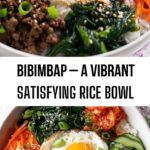
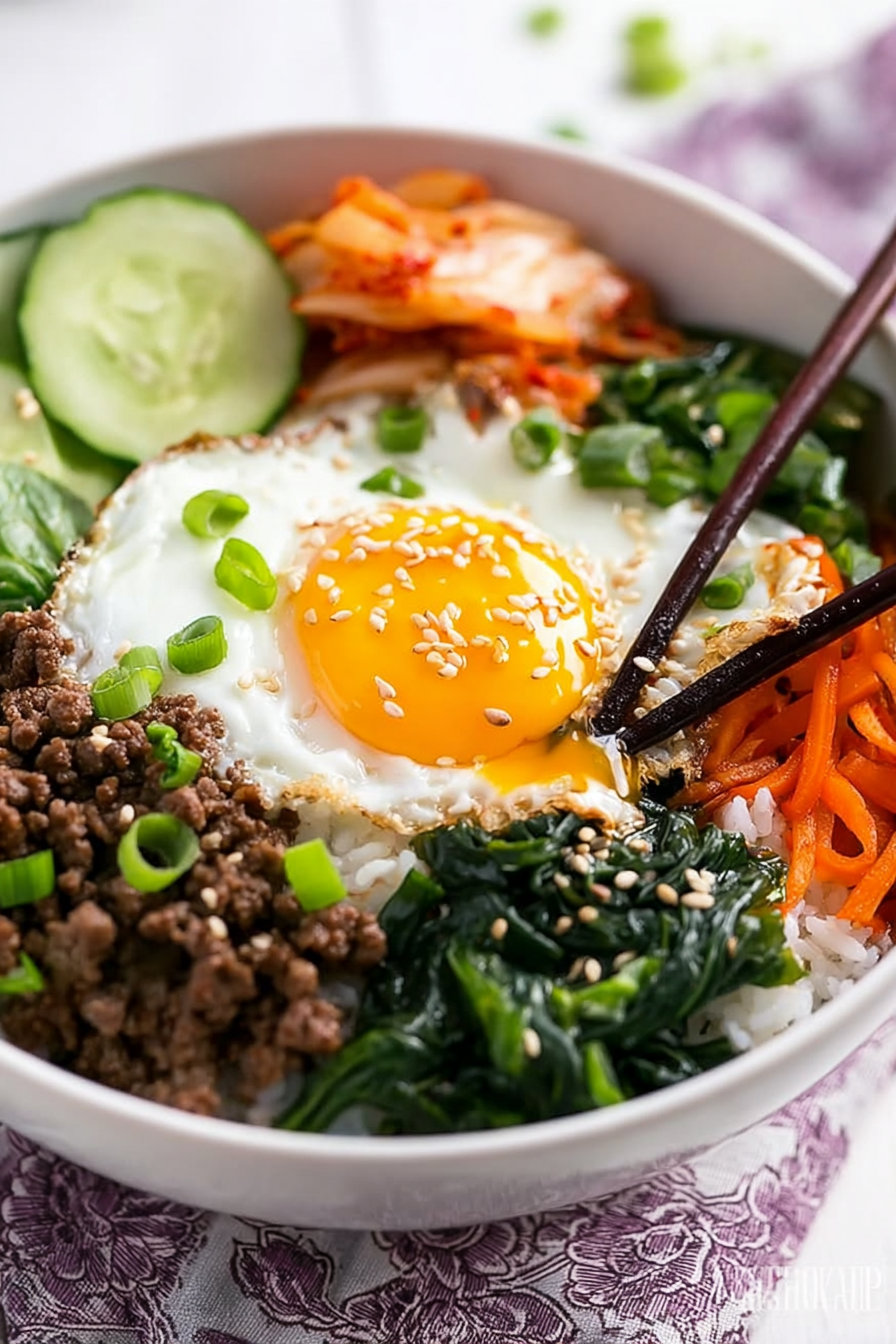
 There’s something undeniably comforting about putting together a bowl of bibimbap.
As the beef sizzles, the spinach wilts, and the rice steams, the kitchen fills with warm, savory aromas that feel instantly grounding.
It’s a simple ritual—chop, sauté, assemble—yet the result looks like a rainbow in a bowl.
Fresh veggies, tender rice, a soft egg, and a pop of kimchi come together in a mix of textures that stays exciting with every bite.
This has quickly become one of my favorite easy weeknight habits.
It’s nourishing, customizable, and perfect for making a few bowls ahead for quick meals all week long.
If you’re craving something wholesome, colorful, and effortlessly delicious, bibimbap is the bowl worth diving into.
For the Rice
- Jasmine Rice – You’ll need 4 cups cooked. This creates the warm, fluffy base that holds the whole bowl together.
For the Sautéed Spinach
- Cooking Oil – A small amount to help the spinach wilt without sticking.
- Fresh Spinach – Six cups may look like a lot, but it cooks down beautifully into a tender, flavorful layer.
- Toasted Sesame Oil – Adds a nutty, rich aroma classic to Korean dishes.
- Salt – Just a pinch to bring out the spinach’s natural flavor.
For the Chili Garlic Beef
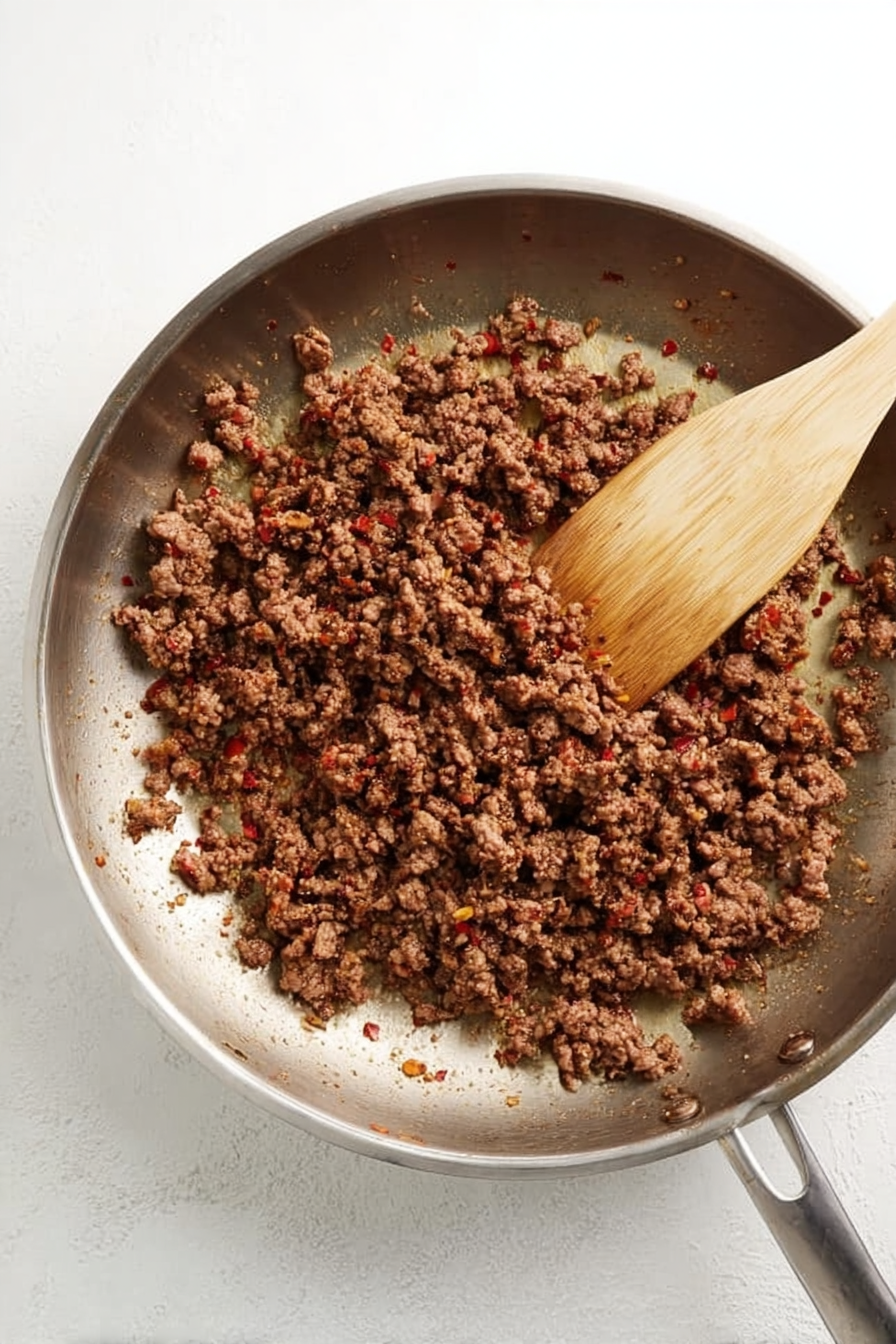
- Ground Beef – A half-pound cooks quickly and brings hearty, savory protein to the bowl.
- Chili Garlic Sauce – Gives the beef a spicy, tangy kick.
- Soy Sauce – Adds depth, saltiness, and umami.
- Brown Sugar – Balances the heat and rounds out the sauce with a touch of sweetness.
For the Fresh Vegetables
- Carrot – Grated for crisp texture and fresh sweetness.
- Cucumber – Sliced thin to add cool crunch and balance the warm components.
- Green Onions – A bright finishing note that lifts all the flavors.
For the Other Toppings
- Eggs – Fried or soft-boiled; the runny yolk brings everything together.
- Kimchi – Adds tang, spice, and probiotic goodness.
- Sesame Seeds – A simple garnish that adds nuttiness and a little crunch.
Bibimbap – A Vibrant, Satisfying Rice Bowl
Ingredients
Rice-
4 cups cooked jasmine rice
-
1/2 Tbsp cooking oil
-
6 cups fresh spinach, loosely packed
-
1 tsp toasted sesame oil
- Pinch of salt
-
1/2 lb ground beef
-
2 Tbsp chili garlic sauce
-
1 Tbsp soy sauce
- 1 Tbsp brown sugar
-
1 carrot
-
1 cucumber
- 2 green onions
-
4 large eggs
-
1/4 cup kimchi
- 1 Tbsp sesame seeds
Instructions
-
Start with the rice.
If you don’t already have cooked jasmine rice on hand, get it going first. You’ll need 4 cups prepared. -
Cook the spinach.
Warm a large skillet over medium heat and add the cooking oil. Once the surface is coated, pile in the fresh spinach. Stir and cook just until the leaves collapse and turn glossy. Finish with the toasted sesame oil and a pinch of salt. Transfer the spinach to a bowl and set it aside. -
Make the beef.
Using the same skillet, brown the ground beef completely. Add the chili garlic sauce, soy sauce, and brown sugar. Stir everything together and let it cook for about a minute so the flavors meld and the beef becomes evenly coated. Turn off the heat. -
Prep the fresh veggies.
Peel the carrot and grate it on the large holes of a box grater. Slice the cucumber thinly, and cut the green onions into small pieces. -
Cook the eggs.
Fry or soft-boil the eggs, depending on how you prefer them. (If you’re prepping bowls for later, it’s best to cook the egg fresh each day.) -
Assemble the bowls.
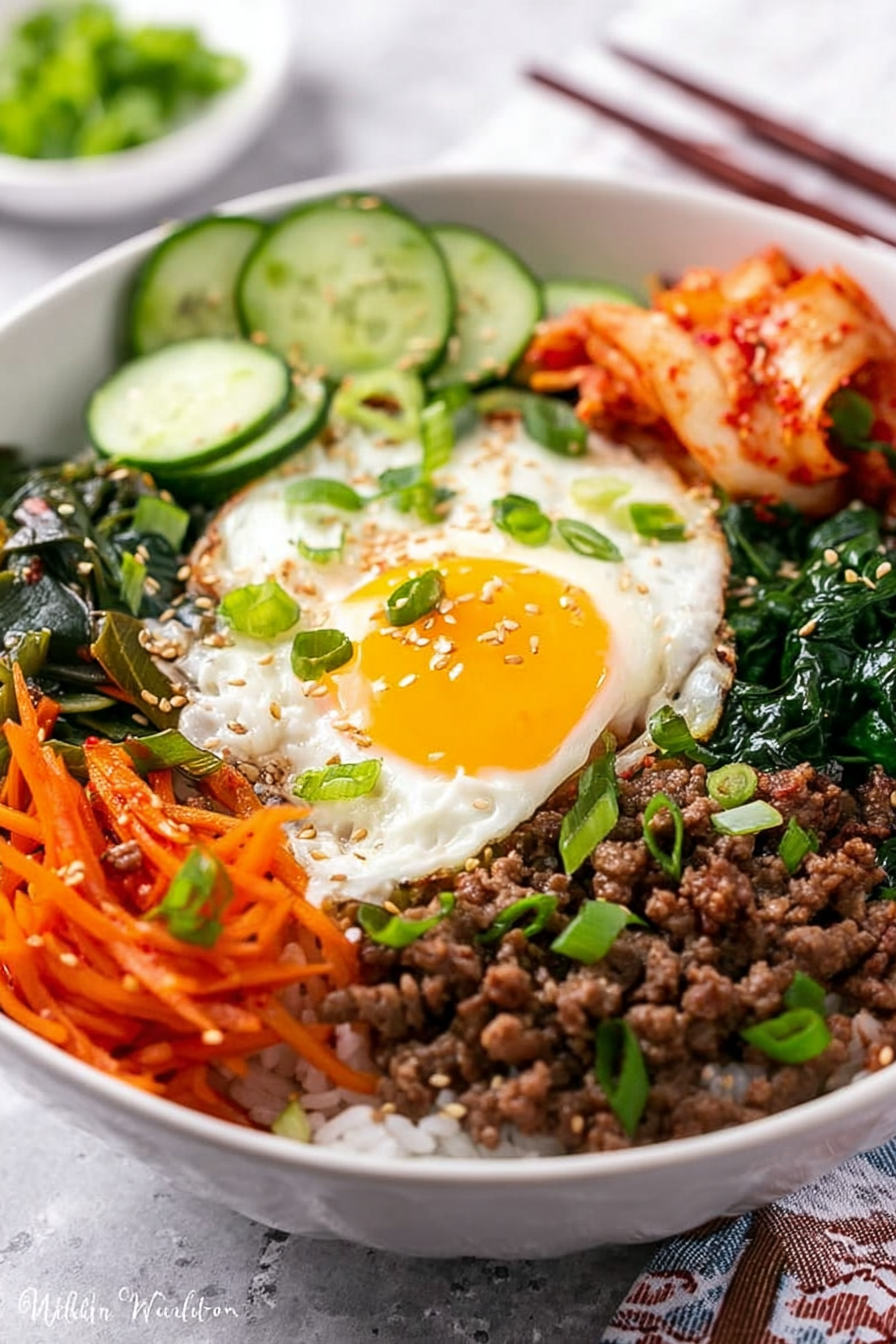
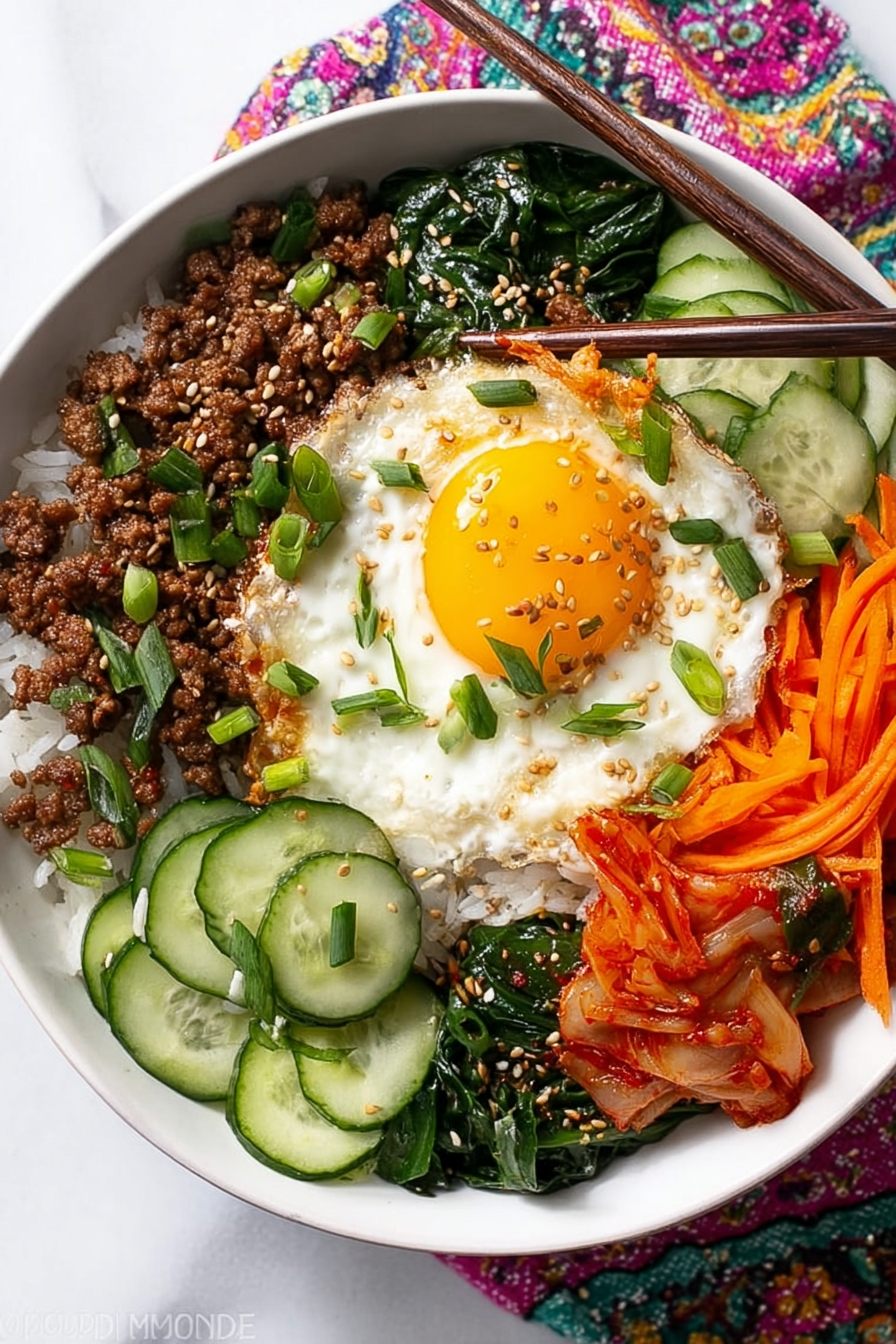
Add 1 cup of rice to each bowl. Arrange the spinach, beef, cucumber slices, grated carrot, and an egg on top. Add about a tablespoon of kimchi, then finish with green onions and sesame seeds. No strict ratios are required—divide everything as evenly as you’d like.
1. Can I use any type of rice for Bibimbap?
Absolutely! Traditional bibimbap uses short-grain sticky rice because it clings together beautifully when you mix everything up. But if jasmine rice is what you’ve got, use it — your bowl will still taste fantastic. It just won’t stick together quite the same way. No drama.
2. Do I really need to cook each ingredient separately?
Yes… and no! Cooking components separately gives you those gorgeous, distinct flavors and textures bibimbap is famous for. But if you’re short on time, feel free to cheat a little — cook veggies ahead, stash them in the fridge, or rely on store-bought prepped veggies. The bibimbap police aren’t coming for you.
3. Can I make it vegetarian (or even vegan)?
Definitely. Bibimbap is super flexible. Skip the beef, add tofu, or simply pile on more veggies. Even without meat or eggs, you’ll still get a bowl full of flavor, color, and crunch. Just make sure you’ve got a good sauce — that’s where the magic happens.
4. I don’t have Korean ingredients. Can I still make this?
Yes! Classic bibimbap often uses ingredients like gochujang or seasoned sprouts, but you can absolutely work with what’s in your kitchen. Mix and match whatever veggies you like, and whip up a simple soy-sesame-chili sauce. Bibimbap isn’t about strict rules — it’s about balance and variety.
5. What’s the easiest way to make this on a busy weeknight?
Prep ahead! Cook your rice, sauté your veggies, and even brown your beef in advance. Then it’s just assemble-and-eat. You can also shortcut with pre-cut veggie packs or store-bought kimchi. And no, you don’t need a stone bowl — a regular bowl is perfectly fine (and a whole lot easier to clean).