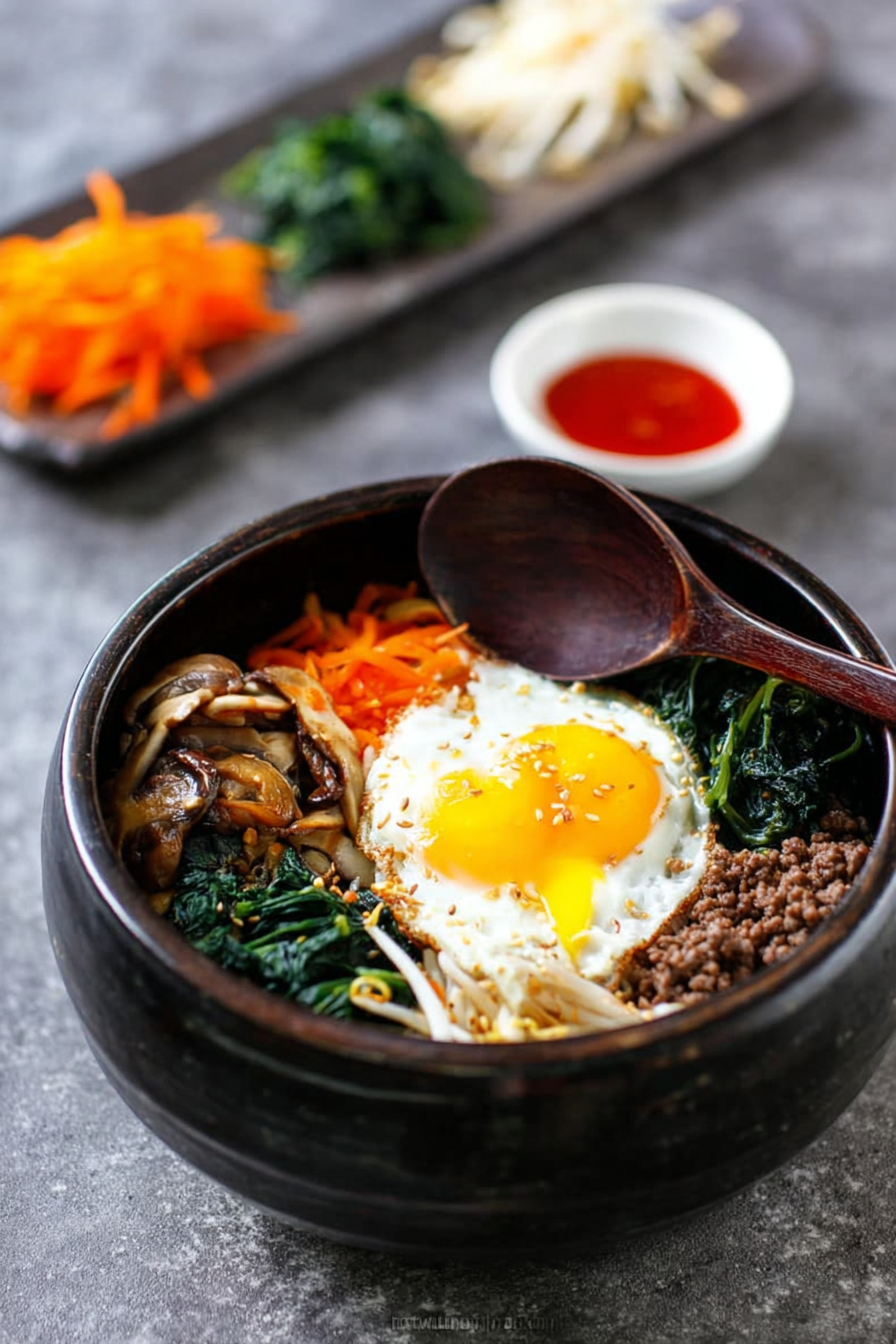
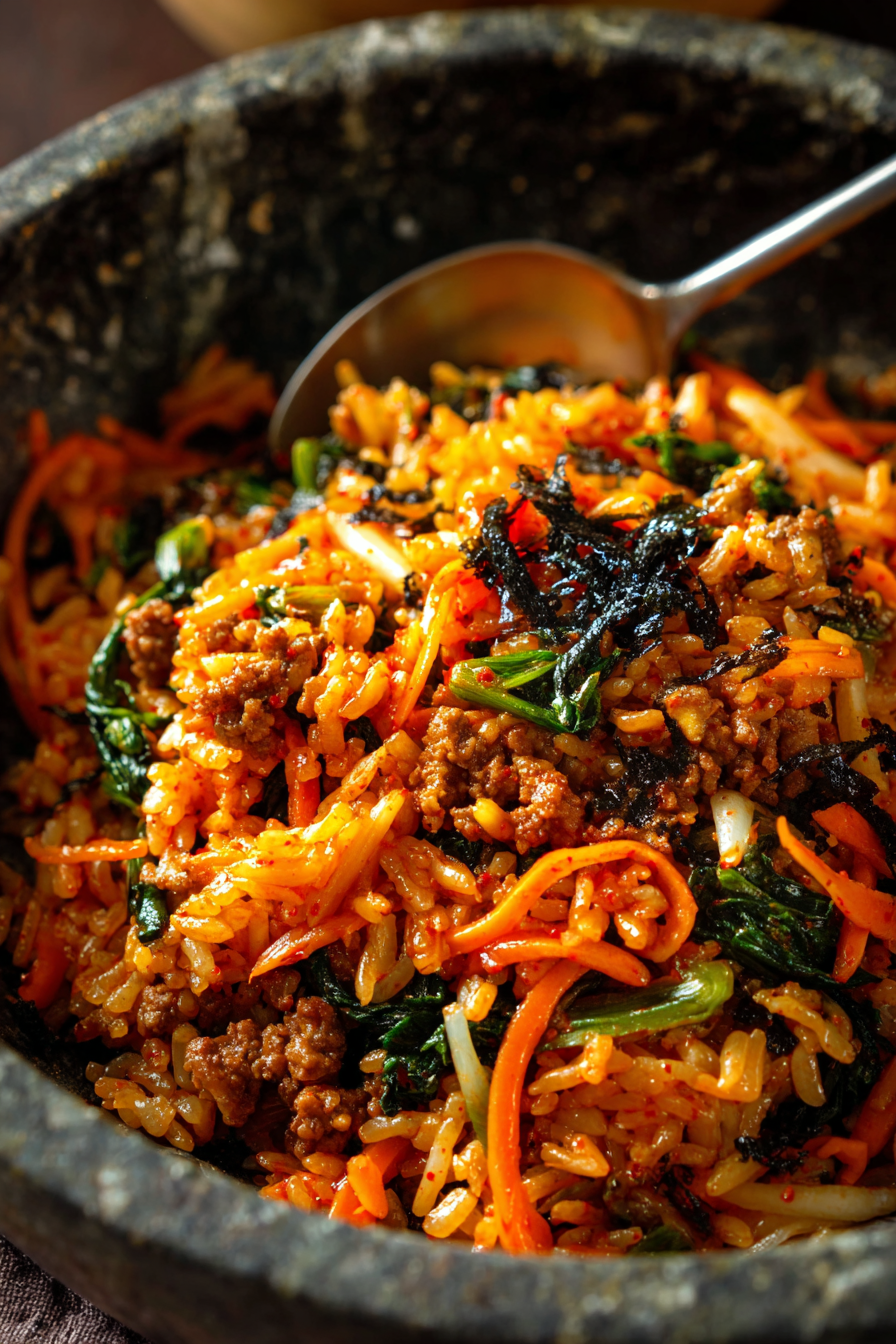
 When you’re craving something colorful, comforting, and full of flavor, bibimbap always delivers.
As the vegetables sizzle and the rice steams, the aromas of sesame oil and garlic fill the kitchen.
Your family will love mixing and matching their favorite toppings,
and you’ll love how effortless it is to bring this nourishing bowl together.
It’s vibrant, customizable, and incredibly satisfying—
a comforting Korean classic you can enjoy any night of the week.
For the Meat
- Beef Mince – 100 g of ground beef gives this dish its savory base, but you can use another cut if you prefer.
- Soy Sauce – Adds salty depth to the marinade.
- Sesame Oil – Brings rich, nutty aroma to the beef.
- Brown Sugar – A touch of sweetness to balance the sauce.
- Minced Garlic – Essential for bold, aromatic flavor.
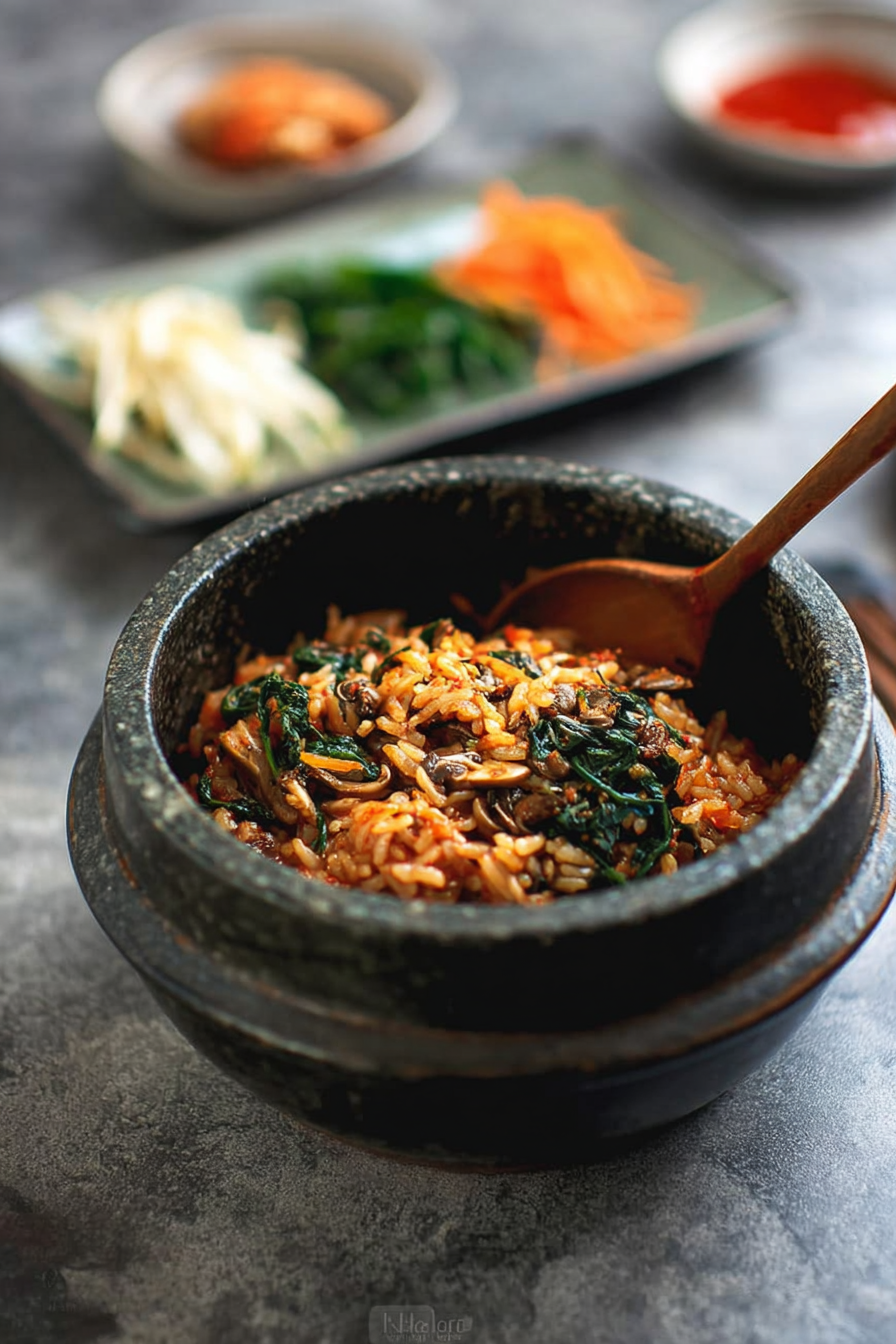
For the Vegetables & Rice
- Spinach – 250 g of blanched spinach adds color and a soft, earthy bite.
- Bean Sprouts – 350 g for extra crunch and freshness—use less if you prefer, but they make the bowl feel hearty.
- Shiitake Mushrooms – 100 g, sliced thin, for deep umami flavor.
- Carrots – 120 g (about one small carrot), julienned and lightly sautéed.
- Fine Sea Salt – ½ teaspoon total, used in small amounts to season the carrots and mushrooms.
- Steamed Rice – About 3 cups, forming the base of each bowl.
- Eggs – 3 to 4 fried eggs, traditionally sunny-side-up, for richness.
- Cooking Oil – Used to sauté the vegetables, cook the beef, and fry the eggs.
- Seasoned Seaweed – Thinly shredded for a savory finishing touch.
For the Bibimbap Sauce
- Gochujang – The star ingredient, offering spicy, tangy depth.
- Sesame Oil – Gives the sauce a silky texture and roasted aroma.
- Sugar – Adds a little sweetness to balance the heat.
- Water – Thins the sauce to the perfect drizzling consistency.
- Toasted Sesame Seeds – For a nutty crunch and extra flavor.
- Vinegar – A splash of brightness; apple vinegar works well.
- Minced Garlic – Adds a sharp, savory edge to the sauce.
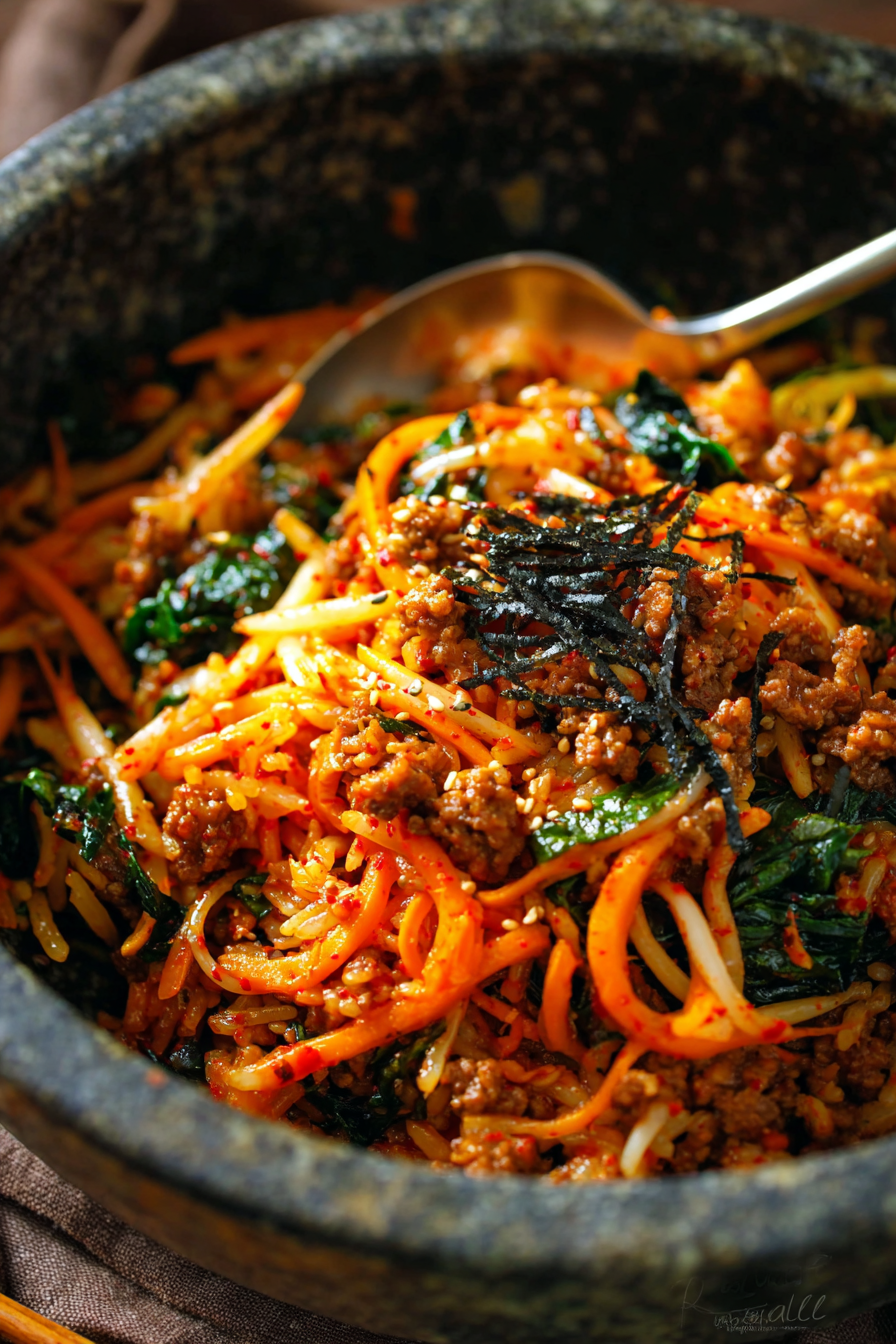
Bibimbap –Delicious Korean Mixed Rice with Meat & Vegetables
Ingredients
Meat & Marinade-
100 g beef mince (3.5 oz), or another cut if preferred
-
1 Tbsp soy sauce
-
1 Tbsp sesame oil
-
1 tsp brown sugar
-
1/4 tsp minced garlic
-
250 g spinach (0.6 lb)
-
350 g bean sprouts (0.8 lb)
-
100 g shiitake mushrooms (3.5 oz)
-
120 g carrots (4.2 oz, about 1 small carrot)
-
1/2 tsp fine sea salt (¼ tsp each for mushrooms and carrots)
-
3 cups steamed rice (enough for 3–4 bowls)
-
3 eggs (or 4, depending on how many servings you’re making)
-
Cooking oil for sautéing (rice bran oil was used)
- Shredded toasted seasoned seaweed
-
2 Tbsp gochujang
-
1 Tbsp sesame oil
-
1 Tbsp sugar (raw sugar used)
-
1 Tbsp water
-
1 Tbsp toasted sesame seeds
-
1 tsp vinegar (apple vinegar used)
- 1 tsp minced garlic
Instructions
1. Prepare the Meat Combine the beef with the soy sauce, sesame oil, brown sugar, and garlic. Let it soak in the marinade for about 30 minutes while you prepare the vegetables. Heat a little cooking oil in a wok and cook the beef over medium-high to high heat until fully cooked, about 3–5 minutes. 2. Make the Sauce Stir all bibimbap sauce ingredients together in a bowl until smooth. 3. Cook the Spinach & Bean Sprouts Prepare these following the linked method from the original recipe. 4. Sauté the Carrots Peel and julienne the carrot. In a wok, heat a bit of oil with 1/4 tsp fine sea salt and cook over medium-high to high heat for 2–3 minutes. 5. Cook the Mushrooms Rinse the shiitake mushrooms and cut them into thin slices. Add oil and the remaining 1/4 tsp salt to a wok. Stir-fry the mushrooms on medium-high to high heat for 2–3 minutes, or until tender. 6. Fry the Eggs Sunny-side-up is typical, but any style you enjoy will work. 7. Assemble Fill each bowl with steamed rice, then arrange the beef, vegetables, seasoned seaweed, sauce, and a fried egg over the top. 8. Serve Mix everything together thoroughly before eating and enjoy the combination of textures and flavors. Nutrition Calories: 570kcal | Carbohydrates: 71g | Protein: 24g | Fat: 23g | Saturated Fat: 6g | Trans Fat: 1g | Cholesterol: 187mg | Sodium: 916mg | Potassium: 1146mg | Fiber: 7g | Sugar: 14g | Vitamin A: 14780IU | Vitamin C: 43mg | Calcium: 191mg | Iron: 6mg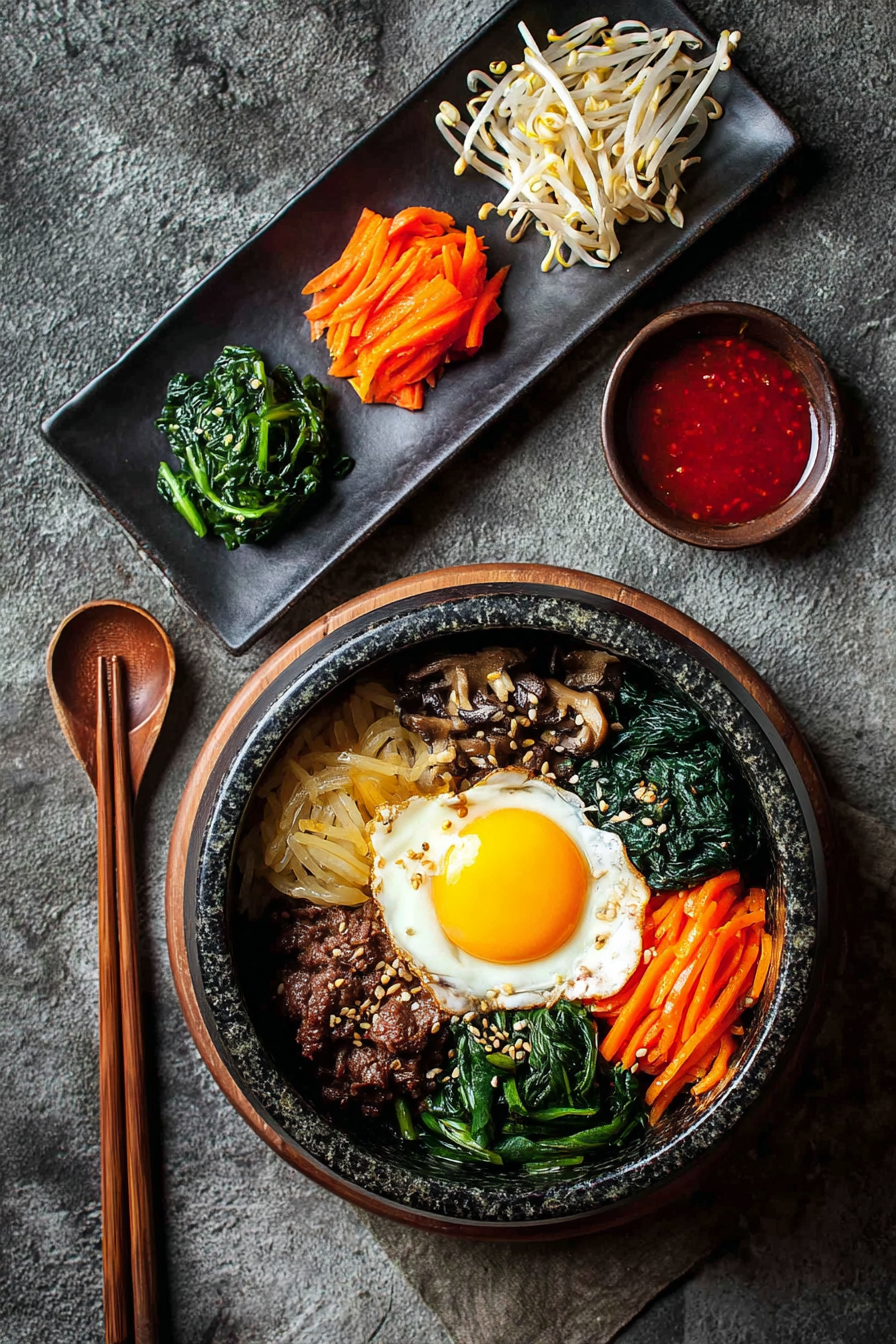
1. Do I really need to cook every vegetable separately?
Short answer: Yes… but also no!
Cooking each veg on its own keeps everything tasting fresh and vibrant — no soggy, flavor-less mush here. But if you’re short on time, batch-prep them ahead or cook the quick ones back-to-back in the same pan. Tastes just as good, promise.
2. Can I use regular rice instead of Korean short-grain?
You can — but short-grain rice gives you that signature “mix-me!” stickiness. If you’re using long-grain, let it sit covered for a few minutes after cooking so it gets a little clingier. Not traditional, but we won’t tell.
3. What can I use instead of beef?
Anything you’ve got! Chicken, tofu, mushrooms — Bibimbap is extremely forgiving. The sauce is the real flavor hero anyway, so your protein can be as simple as a quick pan-fry with soy sauce and garlic.
4. Do I need one of those sizzling hot stone bowls?
Nope! A regular bowl works just fine — though a dolsot does give you that addictive crispy rice bottom. If you want the effect without special cookware, fry your cooked rice with a drizzle of sesame oil until the edges go golden. Boom: faux-dolsot.
5. How do I make this faster on busy nights?
Prep. Ahead. Honestly, it’s a game changer.
Cook your veg in batches, mix the sauce in advance, keep cooked rice in the fridge, and you’ve basically got DIY Korean bowls waiting to happen. Assembly dinner = done in 5 minutes.