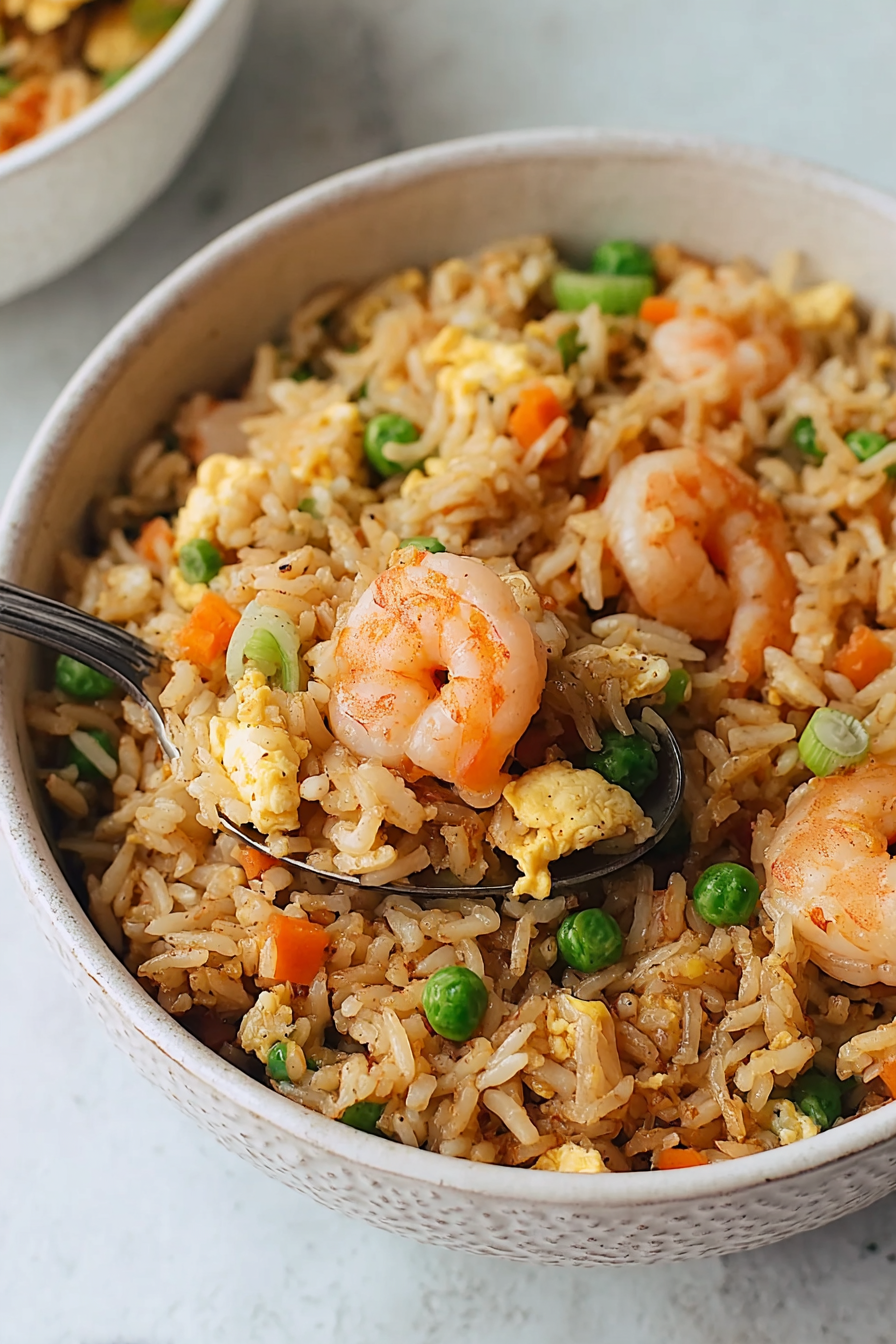

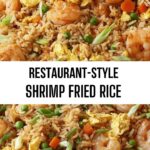
 Craving shrimp fried rice that truly satisfies? This is the kind you make on a quiet evening when you want something comforting, familiar, and deeply flavorful—without calling for takeout.
As butter melts in the pan and garlic and ginger hit the heat, the kitchen fills with that unmistakable restaurant aroma. Everything starts to feel warm, cozy, and a little nostalgic.
By the time the rice is tossed with juicy shrimp, soft eggs, and savory sauce, you’re rewarded with a hearty bowl that feels both indulgent and homemade.
Simple ingredients, high heat, and a few smart techniques come together to create shrimp fried rice that’s comforting, satisfying, and absolutely worth making at home.
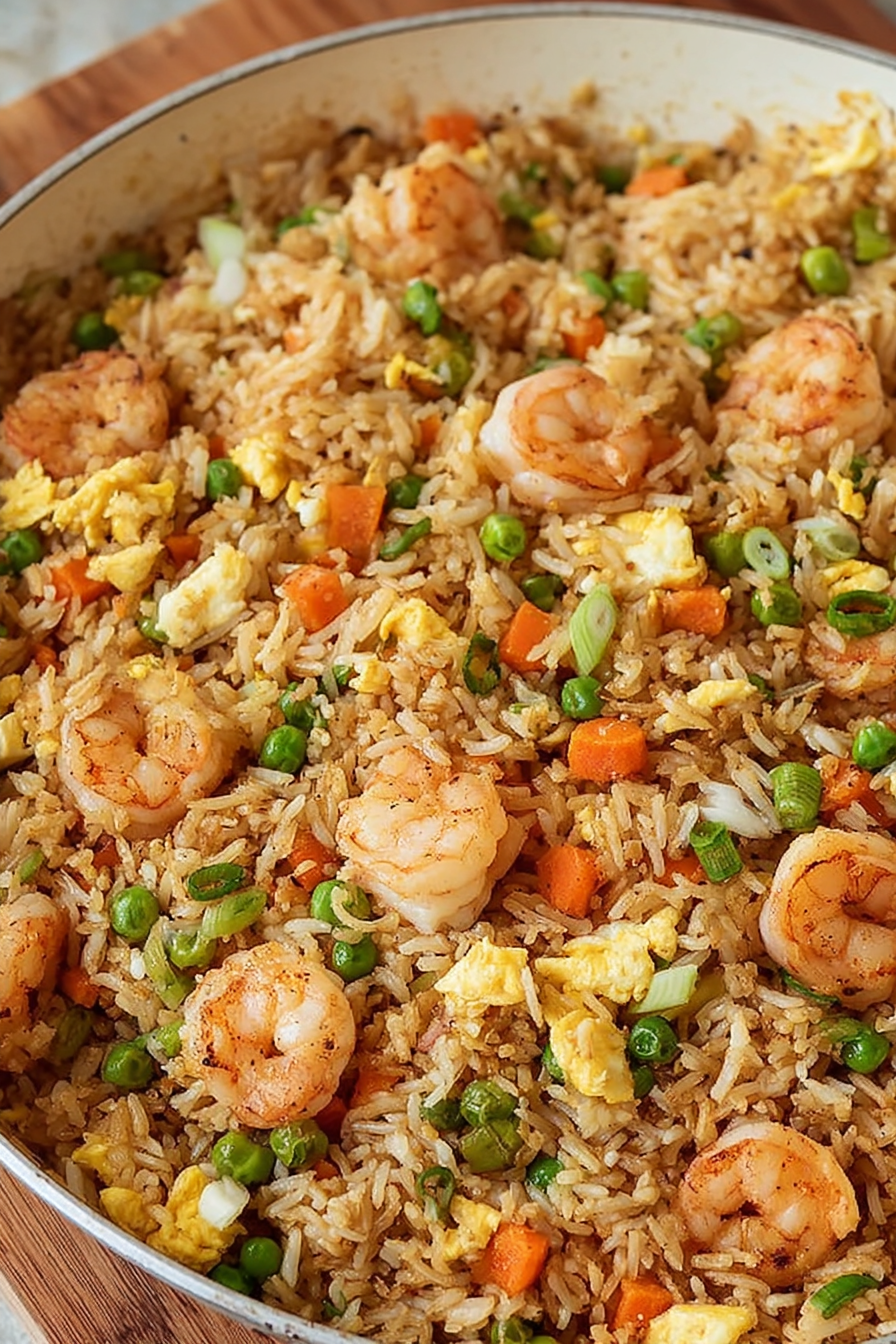
For Shrimp Fried Rice
- Shrimp – Small to medium shrimp work best here. They cook quickly, stay juicy, and absorb the sauce beautifully without overpowering the rice.
- Cooked Rice – Cold, day-old jasmine or basmati rice is essential. Refrigerated rice stays firm and separate, giving you that classic fried rice texture.
- Eggs – Softly scrambled eggs add richness and help balance the savory flavors throughout the dish.
- Butter – This is the secret to restaurant-style flavor. Butter adds depth, richness, and that unmistakable takeout taste.
- Vegetable Oil / Sesame Oil – Used for stir-frying at high heat and preventing sticking, while adding subtle flavor.
- Garlic and Ginger – These aromatics create the base flavor and give the fried rice its warm, savory backbone.
- Red Onion – Adds slight sweetness and texture once softened in the pan.
- Frozen Peas and Carrots – An easy, colorful vegetable mix that adds freshness and crunch.
- Green Onions (Scallions) – Stirred in at the end for a pop of freshness and mild onion flavor.
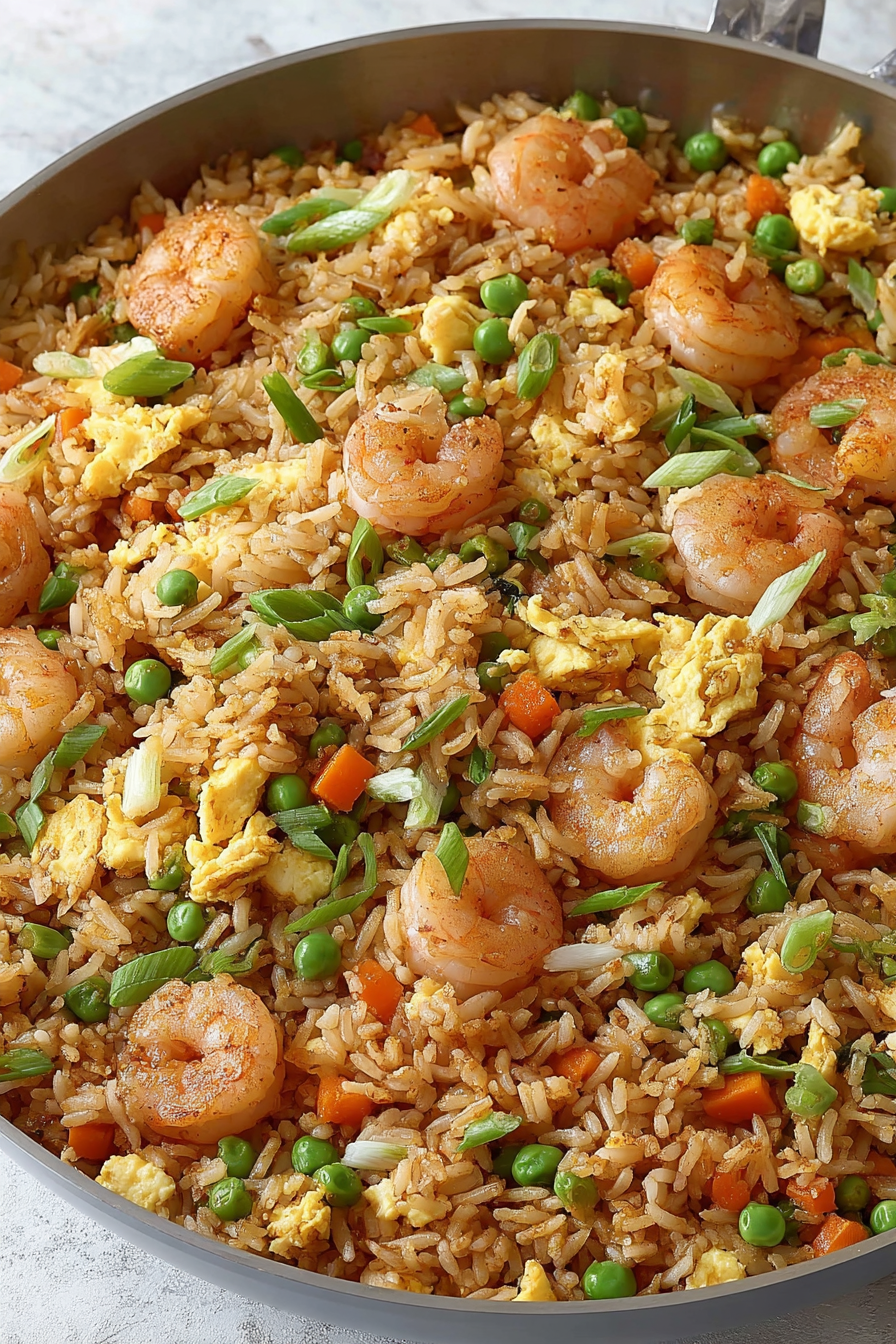
For the Sauce
- Dark Soy Sauce – Provides deep color and that bold, savory umami flavor found in restaurant fried rice.
- Oyster Sauce – Adds richness and complexity without overpowering the dish.
- Sesame Oil – A small amount goes a long way, bringing nutty aroma and depth.
- Brown Sugar – Balances the salty and savory elements with a subtle sweetness.
- Apple Cider Vinegarr – Brightens the flavors and keeps the dish from tasting heavy.
- White Pepper Powder – Gives gentle heat and authentic fried rice flavor.
- Water – Helps thin the sauce slightly so it coats the rice evenly.
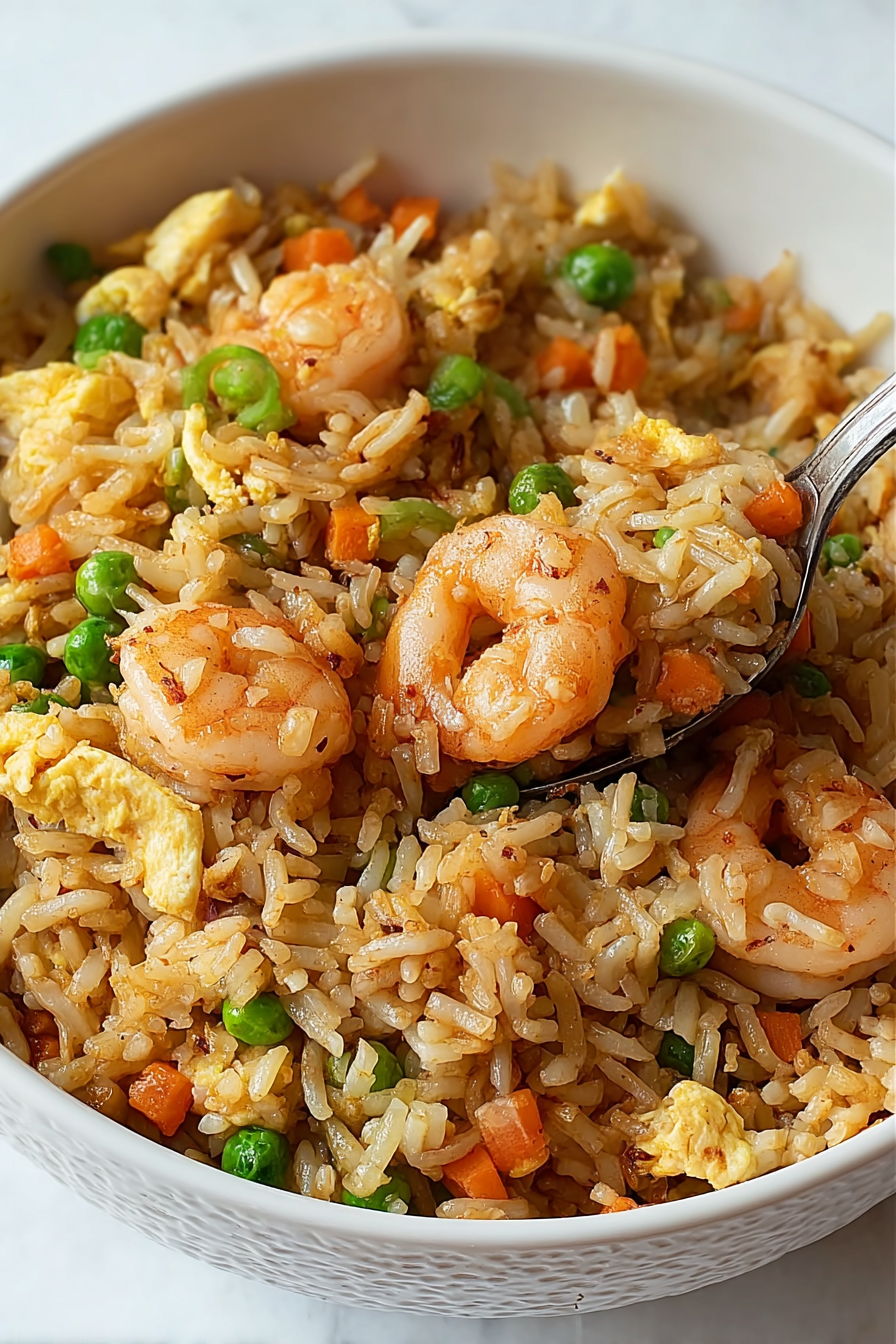
Restaurant-Style Shrimp Fried Rice
This shrimp fried rice delivers bold, savory flavors and that classic takeout-style finish—without leaving your kitchen. Using chilled rice, butter, and high heat gives you fluffy grains, juicy shrimp, and a rich, smoky taste in just half an hour.
Print
Pin
Servings: 3
-
Save
Ingredients
Sauce- 1 tsp Brown Sugar
- 1 tsp Sesame Oil
- 1 tsp Oyster Sauce
- ½ tsp Apple Cider Vinegar
- 2 Tbsp Dark Soy Sauce
- 1 tsp Water
- 1/4 tsp White Pepper Powder
- 4 Cup, Cooked Rice (Jasmine/Basmati), refrigerated
- 1 Cup Small/Medium Shrimp, cleaned, deveined (marinated with 1 tsp Sauce Mix + salt + 1/4 tsp White Pepper Powder)
- 2 Tbsp Butter, unsalted
- 1 Tbsp Vegetable Oil / Sesame Oil
- 1 tsp Ginger, minced
- 1 tsp Garlic, minced
- 1 Small Red Onion, chopped
- 1 Cup Frozen Green Peas and Carrot
- As per need Salt
- 1 Scallion / Spring Onion, greens chopped
- 2 Small Eggs
- As per need Salt
- 1/4 tsp White Pepper Powder
- ½ tsp Apple Cider Vinegar
Instructions
- Soak the rice for at least one hour before cooking.
- Cook the rice the night before and refrigerate until ready to use.
- Combine all sauce ingredients in a bowl and set aside.
- In a separate bowl, beat the eggs with salt, white pepper powder, and apple cider vinegar.
- Marinate the shrimp with salt, white pepper powder, and the prepared sauce mix.
- Heat a pan with 1 Tbsp butter, add shrimp, and cook until pink and fully done. Remove and set aside.
- In the same pan, scramble the eggs into small pieces. Remove and set aside.
- Add the remaining 1 Tbsp butter and vegetable oil or sesame oil to the pan. Add ginger and garlic and sauté until aromatic.
- Stir in onion and frozen vegetables and cook until softened.
- Add the rice, shrimp, and eggs back into the pan and combine thoroughly.
- If the rice has clumped from refrigeration, gently separate it without breaking the grains.
- Pour in the sauce mix and toss well.
- Increase heat and toss continuously until everything is evenly cooked and coated.
- Sprinkle a little water over the rice, cover, and let it steam briefly.
- Finish with additional oil if needed and garnish with spring onion greens.
- Serve hot.
- Cold, day-old rice works best for fried rice. If clumps form, gently loosen them by hand before cooking.
- Use high heat and a well-oiled pan or wok to prevent sticking.
- Cook shrimp, eggs, and vegetables separately before combining for best texture.
- Toss the rice instead of stirring to keep it fluffy and intact.
- Butter is key—it gives fried rice that unmistakable restaurant-style richness.
- Can I use freshly cooked rice instead of refrigerated rice?
Freshly cooked rice is a little too soft for fried rice. It can get mushy when you stir-fry it. If you only have fresh rice, spread it on a baking sheet to cool and dry for 30 minutes before using. Cold rice from the fridge works best. - My rice keeps sticking together. What should I do?
This usually happens if the rice clumps in the fridge. Gently break the clumps apart with your hands before adding it to the pan. Make sure your pan is hot and well-oiled too, that helps keep the grains separate. - Can I swap out the vegetables?
Yes! Peas and carrots are classic, but you can add bell peppers, corn, or edamame. Just cook the veggies until tender before tossing them with the rice. - What if I don’t have oyster sauce?
No worries. You can use a mix of soy sauce and a pinch of sugar, or even a mushroom sauce if you prefer vegetarian. It won’t taste exactly the same, but it will still be delicious. - Why do I need to cook the shrimp separately?
Shrimp cooks very quickly. If you cook it with the rice from the start, it can get rubbery. Cooking it on its own ensures it stays tender, then you can toss it in at the end to heat through.